
The Sparkle of Truth: Distinguishing Natural from Lab-Grown Diamonds with FT-IR
The Diamond Dilemma: Nature vs. Technology
For centuries, diamonds have been the ultimate symbol of rarity and permanence. However, the rise of Lab-Grown Diamonds (LGD) has created a significant challenge for the jewelry and gemstone industry. To the naked eye, a high-quality lab-grown diamond is visually, chemically, and physically identical to a natural one.
Even for experienced gemologists using traditional tools, distinguishing between a billion-year-old natural stone and one grown in a laboratory over a few weeks has become nearly impossible. This is where FT-IR Spectroscopy steps in as the final arbiter of truth.
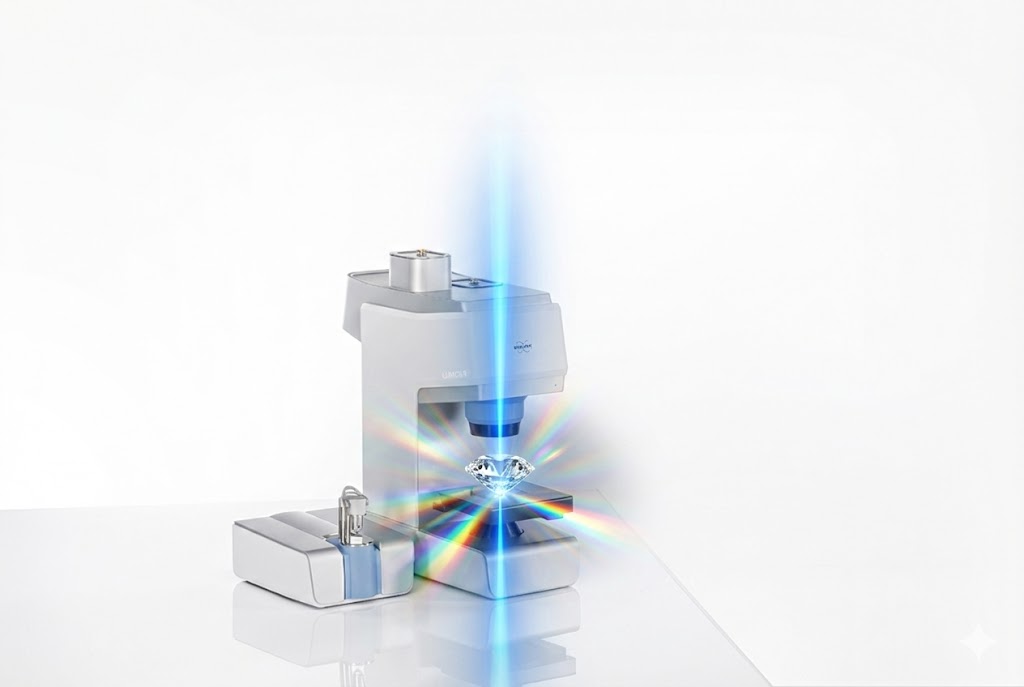
The Science: It’s All in the Defects
Diamonds are almost pure carbon, but it is their "defects", mostly Nitrogen atoms, that tell the story of their origin.
- Natural Diamonds: Most natural diamonds (Type Ia) contain Nitrogen atoms that have had millions of years to aggregate into specific clusters (A-centers and B-centers).
- Lab-Grown Diamonds: Whether grown via CVD (Chemical Vapor Deposition) or HPHT (High Pressure High Temperature), these stones lack the specific Nitrogen aggregation found in nature. They are often Type IIa (pure, no measurable nitrogen) or contain isolated nitrogen atoms that haven't had time to cluster.
By measuring how these stones absorb infrared light, we can see these molecular arrangements with absolute clarity.
Non-Destructive Certification with LUMOS II
High-value gemstones cannot be damaged or altered during testing. Fourier Transform Infrared (FT-IR) Microscopy is the ideal solution because it is entirely non-destructive.
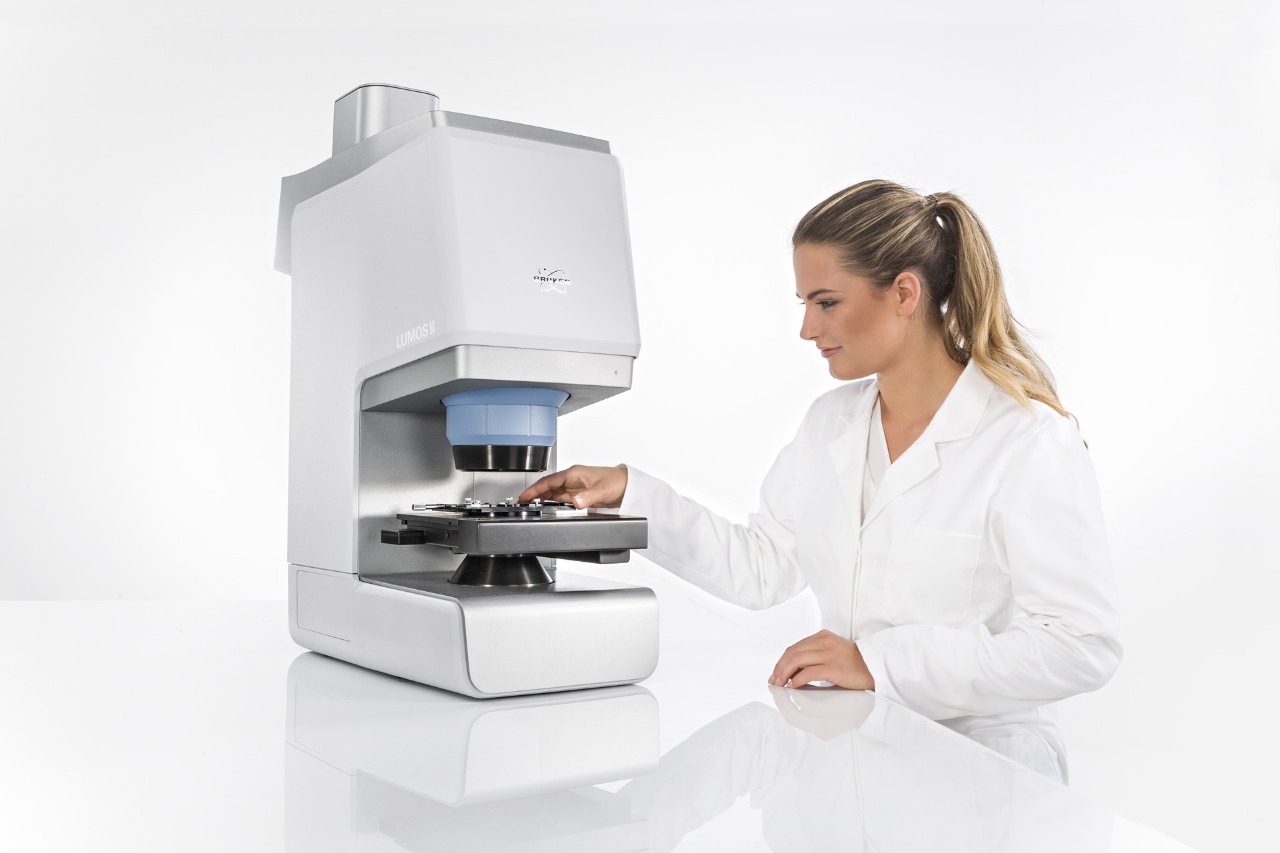
The Bruker LUMOS II FT-IR Microscope is specifically designed for this level of precision:
- Analyze Mounted Stones: Because of its large working distance and automated ATR technology, the LUMOS II can analyze diamonds already set in rings, earrings, or necklaces.
- Microscopic Precision: It can focus on a tiny spot on the stone, ensuring the signal isn't "muddled" by the metal setting or other nearby stones.
- Automation for Speed: For dealers or certification labs handling hundreds of stones, the LUMOS II provides an automated workflow that classifies stones as "Natural," "Potential Synthetic," or "Treated" in seconds.
Protecting the Supply Chain
The ability to definitively identify LGDs is not about devaluing them, it's about transparency. Lab-grown diamonds have a valid place in the market as ethical and affordable alternatives. However, for investors and consumers paying a premium for a "natural" stone, the integrity of the supply chain depends on rigorous testing.
Spectroscopy provides the "Definitive Evidence" required for modern gemological certification, ensuring that every sparkle is backed by cold, hard data.
What this means for a certificate lab
The throughput question decides the setup. A lab that screens parcels needs a fast pass or fail on every stone. A lab that issues certificates needs the spectrum on file, with the operator, the date and the instrument recorded alongside it.
Both start from the same measurement. What differs is what you keep afterwards.
*Interested in seeing how the LUMOS II can transform your gemstone analysis? Explore our application notes or request a demo today.*